

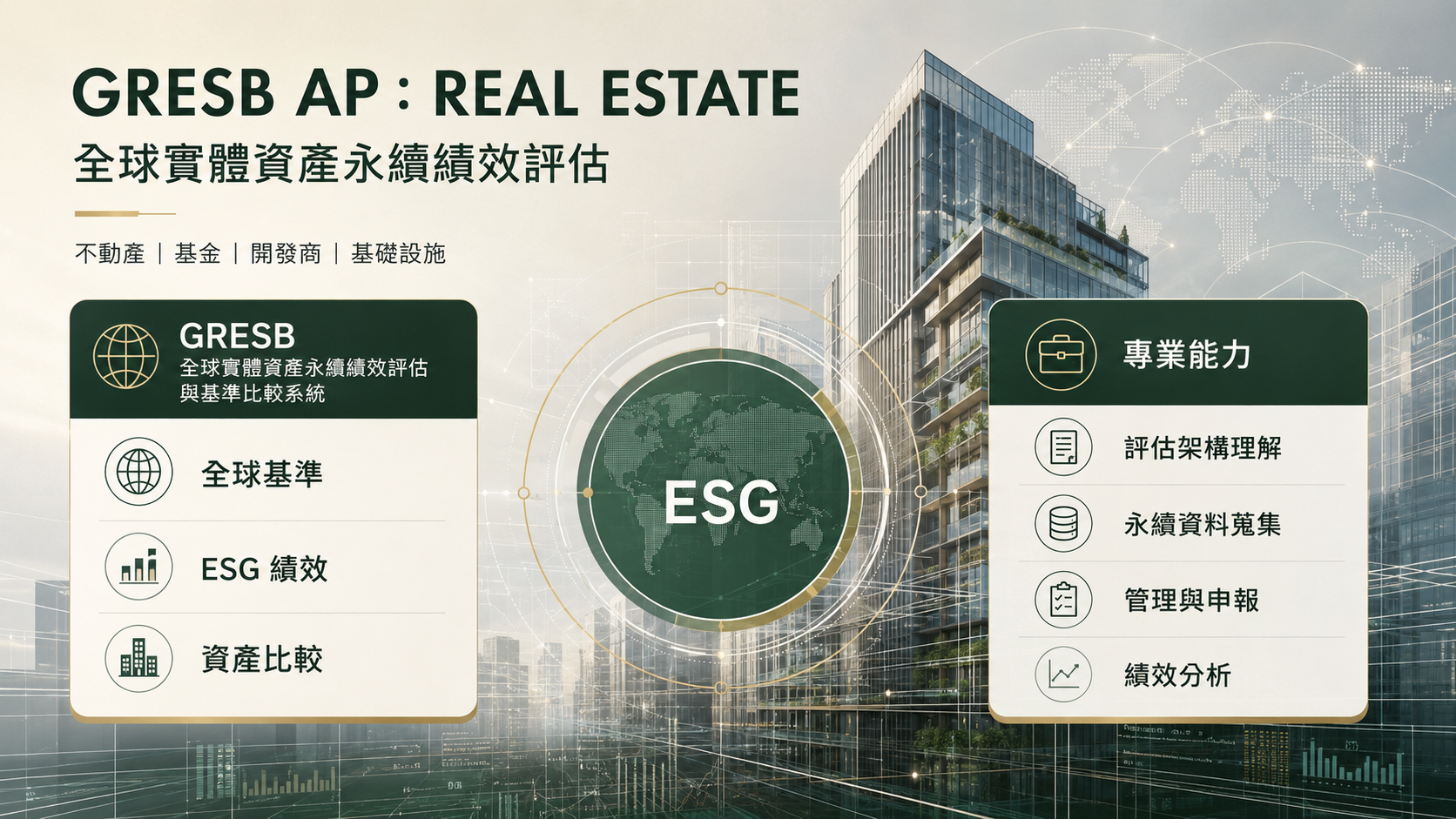
GRESB is a globally recognized sustainability performance assessment and benchmarking framework for real assets. It is primarily used by real estate companies, funds, developers, REITs, and asset managers.
Its assessment framework covers three key components:
- Management evaluates an organization’s sustainability strategy, governance structure, risk management, and stakeholder engagement.
- Performance measures the operational performance of existing assets, including energy consumption, carbon emissions, water use, and waste management.
- Development focuses on sustainability practices throughout new construction, redevelopment, and major renovation projects.
Through annual data submission, validation, scoring, and peer benchmarking, participants can understand how their performance compares with relevant market standards and industry peers.
Unlike green building certifications, which primarily evaluate the performance of individual buildings, GRESB focuses on the long-term management of companies and real estate portfolios. It helps investors identify risks and opportunities while enabling asset owners to establish measurable, traceable, and continuously improving ESG management systems.
GRESB is therefore more than an assessment tool. It provides a common language connecting design, operations, carbon management, and investment decision-making—transforming sustainability commitments into verifiable asset performance and long-term value.